Cell-Based Assays
Fit-for-purpose in vitro assays to confirm activity and support candidate selection
Mosaic delivers biologically relevant, data-rich functional insights through custom cell-based assay development for biologics discovery programs, including in-house generation of cell lines and assays.
We combine commercial and engineered cell systems with flow cytometry, fluorescence microscopy, and plate-based functional readouts to reveal mechanism of action and guide lead selection.
Our functional assays are built around program-specific biology, ensuring relevance and interpretability.
These functional assays are frequently paired with Antibody Discovery & Optimization programs to evaluate candidate binding and downstream cellular signaling.
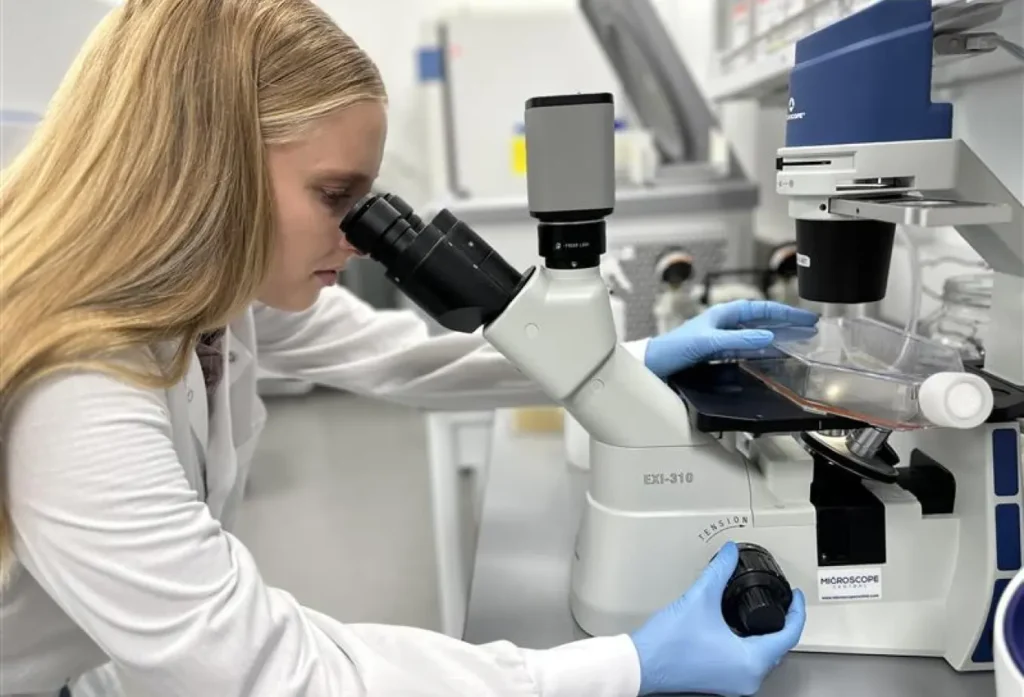
Cell-Based Assay Capabilities
Cellular Response Readouts
Effector function (ADCC, ADCP, CDC, TDCC)
Receptor internalization (fluorescence microscopy–based)
Proliferation
Signaling (phospho-flow, reporter activity, and downstream functional readouts)
Cell death (apoptosis, necrosis)
Cytokine release
Receptor & Cell Engagement
Bispecific engagement
Binding and EC50 determination
Receptor occupancy
Competitive binding
Epitope-specific function
Stable Cell Line Generation
Knockout / Knockdown: CRISPR-based gene editing and RNAi approaches generated in house for target validation and specificity assessment
Overexpression & Stable Line Generation: Tunable expression systems for challenging or low-abundance targets
Immune Cell Models: Primary PBMCs, T cells, NK cells, and immortalized engineered effector cell lines
Reporter Cell Lines: Luciferase and pathway-specific reporters, commercially sourced or generated in house as needed
Cell-Based Assay Technologies
Plate-based Functional Readouts
- Luminescence (ATP, luciferase, cytotoxicity)
- MSD electrochemiluminescence (multiplex cytokine and phosphoprotein detection)
- ELISA and immunoassays
- Absorbance and colorimetric assays
Flow Cytometry
- Multi-parameter immunophenotyping
- Intracellular cytokine staining and signaling analysis
- Cell cycle, apoptosis, and proliferation measurements
- High-throughput analysis
Fluorescence Microscopy
• Qualitative and semi-quantitative imaging

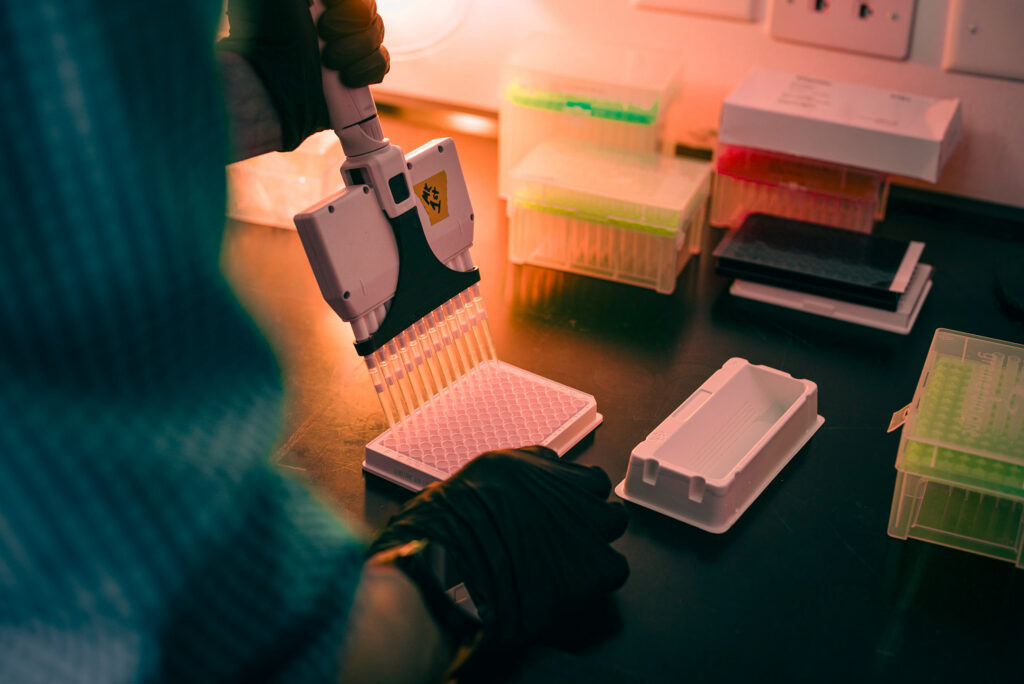
Cell-Based Assay Workflow
1. Assay design and endpoint selection
2. Cell model development or sourcing
3. Assay execution with rigorous controls
4. Analysis and reporting with MoA insight
For later-stage evaluation, Mosaic supports pharmacology studies through our Pharmacology capabilities.
Translational Readiness
Functional profiling routinely includes binding capacity, signaling activation or inhibition, proliferation, survival, and secretion.
This characterization informs dose selection, biomarker strategy, and preclinical study design, bridging in vitro discovery with in vivo proof of concept.
Downstream characterization may include Protein Sciences & Analytics to assess stability, aggregation, and developability.
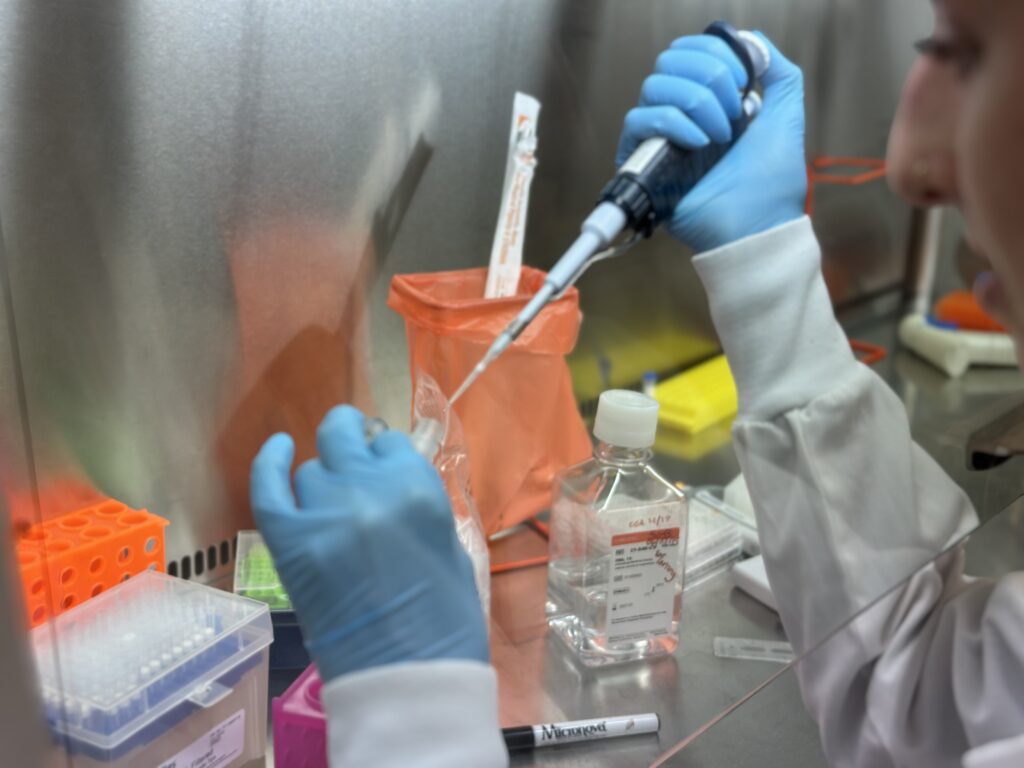
Discover Mosaic’s complete biologics discovery solutions supporting antibody discovery, protein engineering, and pharmacology studies.
Get Started
Start a conversation with our scientific team about your biologic discovery program.
Explore Other Discovery Solutions
Complementary capabilities supporting biologics discovery, engineering, and characterization.

Protein Design & Engineering

Antibody Discovery & Optimization

Protein Sciences & Analytics
